

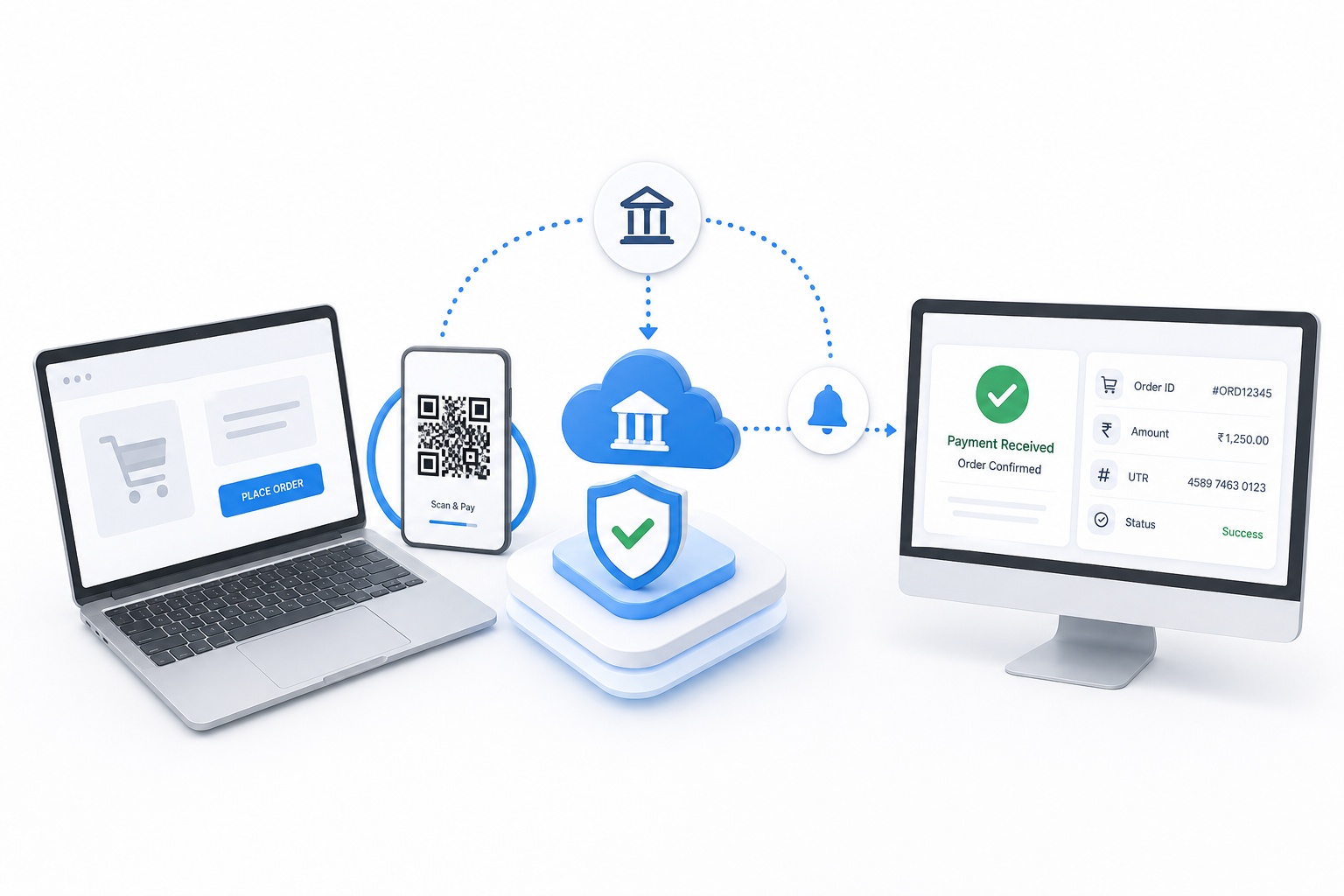
Launching an online business, freelancing practice, or digital service in India has never been easier. However, setting up a payment system often presents an immediate hurdle. Many new entrepreneurs, creators, and service providers ask whether they can get a payment gateway without a Goods and Services Tax Identification Number (GSTIN).
The short answer is yes. It is entirely possible to accept online payments without a GST number in India, provided your annual turnover falls below the statutory threshold set by the government.
Yet, navigating traditional payment gateways, merchant KYC requirements, tax deductions, and transaction fees can be confusing. Traditional payment aggregators often request extensive documentation, charge processing fees with non-recoverable tax surcharges, and introduce settlement delays that complicate business operations.
This comprehensive guide covers everything you need to know about accepting digital payments without a GST number. You will learn about legal requirements, how payment aggregators evaluate unregistered businesses, the hidden costs of gateway processing fees, and why dedicated UPI payment solutions have become the preferred choice for growing Indian merchants.
Understanding GST Regulations for Online Sellers and Freelancers
To choose the right payment solution, it is essential to understand the legal framework governing GST registration in India.
The Indian tax framework sets clear turnover limits below which businesses are not legally mandated to register for GST. These thresholds are designed to protect micro-enterprises, freelancers, and early-stage entrepreneurs from administrative overhead.
+-----------------------------------------------------------------------+
|                    Standard GST Turnover Thresholds                   |
|                                                                       |
|  Category: Service Providers & Freelancers                            |
|  Standard States Threshold: ₹20 Lakhs Annual Turnover                 |
|  Special Category States: ₹10 Lakhs Annual Turnover                   |
|                                                                       |
|  Category: Goods Suppliers (Intra-State Physical Goods)               |
|  Standard States Threshold: ₹40 Lakhs Annual Turnover                 |
|  Special Category States: ₹20 Lakhs Annual Turnover                   |
+-----------------------------------------------------------------------+
1. Service Providers and Freelancers
If you provide services such as software engineering, graphic design, content marketing, legal consulting, tutoring, or web development, the mandatory GST registration threshold is ₹20 lakhs in annual gross revenue (or ₹10 lakhs if operating from special category states in the Northeast and hill regions). If your annual revenue is below this threshold, you are not legally required to hold a GSTIN.
2. Physical and Digital Goods Sellers
For businesses selling physical goods, the standard threshold is ₹40 lakhs in annual turnover for intra-state sales in most states.
Historically, Section 24(ix) of the Central Goods and Services Tax (CGST) Act mandated that anyone selling goods through an e-commerce operator had to obtain compulsory GST registration, regardless of turnover. However, the GST Council introduced vital relaxations that permit unregistered micro-businesses to sell online up to the turnover threshold, provided they operate intra-state and generate an official enrolment number through the GST portal.
Why Do Traditional Payment Gateways Ask for a GSTIN?
If the law allows businesses below the turnover threshold to operate without GST, why do many payment gateway onboarding forms include a mandatory GST field?
The answer lies in the regulatory distinction between tax compliance and payment aggregator risk management.
                  Why Payment Providers Ask for GST
                                  │
      ┌───────────────────────────┼───────────────────────────┐
      ▼                           ▼                           ▼
Reserve Bank of India       Business Entity             Automated B2B
KYC Guidelines              Verification                Invoicing & ITC
(Identity validation)       (Confirming legitimacy)     (Issuing tax receipts)
1. Payment Aggregator KYC Norms
Payment Aggregators (PAs) operate under strict regulatory frameworks established by the Reserve Bank of India (RBI). To prevent money laundering, financial fraud, and shell operations, aggregators are required to verify the identity and operational legitimacy of every merchant they onboard.
A GSTIN provides immediate, verified proof that a business entity is registered in official government databases, making verification faster for automated underwriting systems.
2. Business Entity Classification
When applying for a merchant account, gateways classify businesses into categories:
- Sole Proprietorship
- Partnership Firm
- Limited Liability Partnership (LLP)
- Private Limited Company
- Individual / Unregistered Freelancer
For registered corporate entities, a GSTIN is mandatory. For individuals and sole proprietors operating under the statutory turnover threshold, payment gateways can accept alternative KYC documents, though some platforms make this option difficult to find or restrict account features.
3. Corporate B2B Invoicing
Traditional payment gateways charge a processing fee on every transaction. They are legally required to levy 18% GST on their processing fees. If a merchant provides a valid GSTIN, the gateway issues a GST-compliant tax invoice, allowing the merchant to claim an Input Tax Credit (ITC).
When a merchant does not have a GSTIN, the gateway still charges the 18% tax on its fee, but the merchant cannot claim it back, resulting in an unrecoverable business expense.
Can You Use a Payment Gateway as an Individual Without GST?
Yes, you can register with several payment gateways in India as an "Individual" or "Unregistered Business."
When applying without a GSTIN, you must verify your identity using personal and financial documents.
+-----------------------------------+-----------------------------------+
| Required Document                 | Purpose in Verification           |
+-----------------------------------+-----------------------------------+
| Personal PAN Card                 | Identity & Primary Tax Mapping    |
| Aadhaar Card / Passport           | Proof of Address (Via DigiLocker) |
| Cancelled Cheque / Bank Statement | Bank Account Ownership Validation |
| Business Description / URL        | Operational Risk Assessment       |
+-----------------------------------+-----------------------------------+
The Limitations of Individual Onboarding on Traditional Gateways
While traditional gateways allow individual onboarding without GST, they often impose operational constraints:
- Lower Monthly Processing Limits: Gateways may cap your monthly inward volume until you provide additional proof of business continuity.
- Longer Verification Cycles: Automated approval systems prioritize GST-backed applications, while non-GST accounts often require manual review by risk underwriting teams.
- Higher Risk of Account Freezes: Unregistered accounts that experience sudden volume spikes often trigger automated fraud flags, leading to temporary settlement pauses.
- Unrecoverable Tax on Fees: You pay 18% GST on top of standard gateway processing fees without the ability to claim an Input Tax Credit.
The Hidden Cost: How Traditional Gateway Fees Affect Non-GST Merchants
When evaluating payment collection methods without a GST number, it is critical to calculate the actual cost of payment acceptance.
Traditional payment aggregators charge a Merchant Discount Rate (MDR) ranging from 1.8% to 3% depending on the payment mode (credit cards, debit cards, net banking, or corporate wallets). Under Indian tax law, the aggregator must levy an additional 18% GST on that fee.
+-----------------------------------------------------------------------+
|              Payment Gateway Fee Deduction Calculation                |
|                                                                       |
|  Transaction Value: ₹10,000                                           |
|  Standard Gateway Fee (2% MDR): ₹200                                  |
|  18% GST on Gateway Fee: ₹36                                          |
|  Total Fee Deducted: ₹236                                             |
|                                                                       |
|  Net Amount Credited to Merchant: ₹9,764                              |
|  Effective Fee Rate: 2.36%                                            |
+-----------------------------------------------------------------------+
For registered companies with a GSTIN, the ₹36 tax deduction can be claimed back as an Input Tax Credit against outward tax liabilities.
For unregistered merchants, freelancers, and small businesses, that ₹36 is an absolute loss. Over a year of processing client invoices and sales, this extra deduction significantly reduces your net profit margin.
Annual Transaction Volume: ₹12,00,000
Standard Gateway Deductions (2.36% Total): ₹28,320
Lost to Non-Recoverable GST on Fees: ₹4,320
This structural cost is one of the primary reasons modern online businesses seek payment solutions that do not rely on high percentage fees or unnecessary tax overhead.
Comparison of Payment Collection Methods Without GST
Merchants without a GST number have several payment options in India. Understanding the differences between these methods helps you pick the right balance of speed, cost, and reliability.
Detailed Review: Top 5 Payment Options Without GST
1. Tinave
Tinave is a merchant-focused UPI payment solution engineered to solve manual payment checking, dynamic billing issues, and high gateway fees for businesses, digital agencies, and independent service providers.
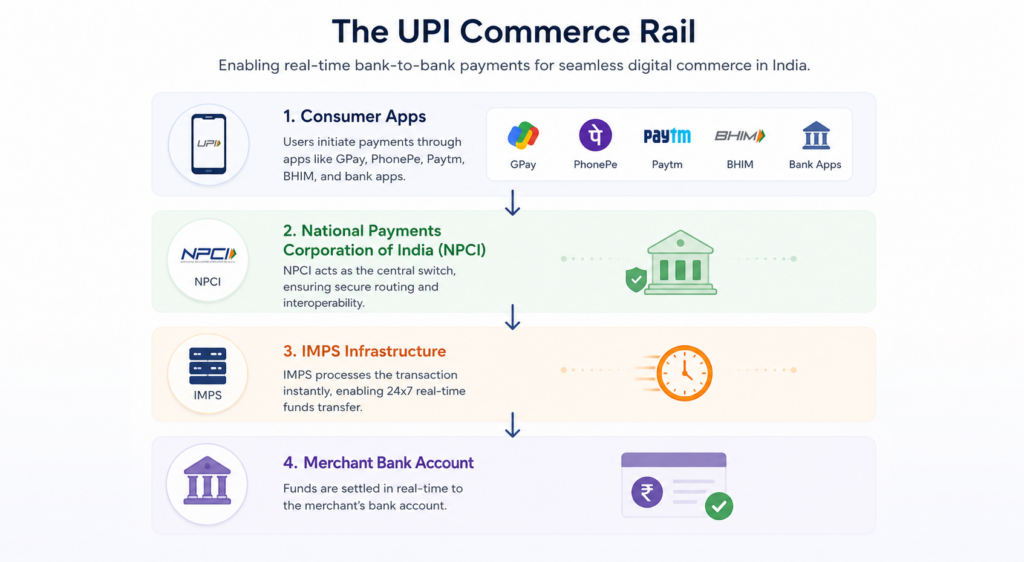
Because Tinave operates on the direct UPI banking rail, it allows small businesses, freelancers, and growing brands to accept online payments without requiring a GST number.
Key Benefits for Non-GST Merchants
- No GST Requirement: Individuals, freelancers, and unregistered small businesses can complete digital onboarding using basic KYC details (PAN and verified bank account).
- Dynamic UPI QR Generation: Creates invoice-specific QR codes with pre-filled, non-editable amounts and unique reference numbers, preventing incorrect payments.
- Direct Bank-to-Bank Settlements: Funds settle directly into your verified bank account without multi-day holding periods in third-party escrow wallets.
- Lower Transaction Fees: Traditional gateways deduct 2% plus 18% GST on every transaction. Tinave keeps transaction overhead down, protecting your profit margins.
- Complete Fraud Protection: Eliminates screenshot fraud. The platform verifies incoming transactions directly at the banking layer before marking an invoice or order as paid.
- Simple Link and Website Integration: Easily embed payment options into invoices, WhatsApp messages, proposals, or websites without complex programming.
Best For
Freelancers, service professionals, digital agencies, course creators, and e-commerce merchants operating below the GST threshold who want an automated, fraud-resistant payment workflow.
2. Razorpay (Individual Account)
Razorpay is one of India's largest payment gateways, offering comprehensive support for credit cards, debit cards, net banking, wallets, and UPI.
Key Features
- Individual Onboarding Track: Allows sole proprietors and freelancers without a GSTIN to register by providing a PAN card, address proof, and bank statement.
- Branded Payment Links: Create customized payment links with itemized bills to share via email or messaging apps.
- Smart Invoicing: Built-in invoice creation tools with embedded payment buttons.
Considerations for Non-GST Users
Razorpay applies standard gateway fees (typically 2% plus 18% GST on the fee). Settlements follow a standard T+2 business day schedule unless an extra fee is paid for instant payouts. Unregistered accounts may also face lower initial transaction limits.
3. Cashfree Payments
Cashfree Payments is a prominent payment infrastructure provider known for its versatile payment links and automated payout capabilities.
Key Features
- Non-GST Registration: Supports individual and unregistered business onboarding using PAN and Aadhaar identity verification.
- Flexible Milestone Links: Create payment requests that allow clients to pay custom advance deposits or milestone balances.
- Multi-Channel Acceptance: Accepts UPI, net banking, and domestic debit and credit cards.
Considerations for Non-GST Users
The platform interface contains advanced enterprise settings that can feel complex for solo operators who only need simple UPI collections. Onboarding verification for unregistered entities may take several business days.
4. Instamojo
Instamojo was designed specifically for independent creators, micro-merchants, and solo entrepreneurs seeking a straightforward way to collect payments and sell digital files.
Key Features
- No GST Needed for Basic Accounts: Freelancers and individuals can sign up using a PAN card and bank account.
- Integrated Storefront: Set up a basic digital store to sell files, consultation slots, or event tickets without building a separate website.
- Fast Link Creation: Generate quick payment links to share across social media and chat channels.
Considerations for Non-GST Users
Instamojo applies platform convenience fees in addition to payment gateway charges, making it more expensive for higher-value freelance contracts and high-volume product sales. Settlements typically take T+2 to T+3 business days.
5. Paytm for Business
Paytm for Business provides merchant payment solutions widely utilized by local retail stores, independent service providers, and small businesses across India.
Key Features
- Fast Digital Onboarding: Quick setup for individuals who already maintain an active Paytm account.
- Universal UPI Acceptance: Accepts payments from all standard UPI applications (Google Pay, PhonePe, BHIM, and Paytm).
- Integrated Merchant Dashboard: View daily incoming collections and manage basic banking services in one place.
Considerations for Non-GST Users
Paytm for Business is primarily optimized for in-person retail counters using static QR codes. It offers limited features for generating dynamic, invoice-specific payment links or embedding automated payment flows into professional digital invoices.
Why Dynamic UPI is the Best Solution for Non-GST Merchants
For businesses operating without a GST number, dynamic UPI payment solutions like Tinave offer significant operational and financial advantages over traditional card-based gateways.
+-----------------------------------------------------------------------+
|               Static Personal QR vs Dynamic UPI Platform              |
|                                                                       |
|  Static Personal QR:                                                  |
|  * Client manually enters amount (prone to errors and typos)          |
|  * Client sends manual screenshot (risk of edited/fake receipts)      |
|  * Merchant manually checks bank SMS (wastes time, disrupts focus)    |
|                                                                       |
|  Dynamic UPI Solution (Tinave):                                       |
|  * Amount and invoice ID locked into QR (zero input errors)           |
|  * Bank-layer real-time verification (eliminates screenshot fraud)    |
|  * Automated status update on dashboard (zero manual work)            |
+-----------------------------------------------------------------------+
1. Eliminating Payment Screenshot Fraud
A major challenge for independent businesses accepting personal UPI is screenshot fraud. Deceptive clients use photo-editing software or fake payment simulator apps to generate convincing confirmation screens.
Because a dynamic UPI platform verifies the transaction directly with the banking rail, fake screenshots will never trigger an order confirmation or deliverable release.
2. Preventing Customer Entry Mistakes
When a customer scans a standard static QR code, they must type the payment amount manually. This frequently leads to accidental typos, underpayments, or delayed transfers.
Dynamic QR codes embed the exact invoice amount directly into the payment request. When the customer scans the code, their UPI application automatically loads the correct figure without allowing manual edits.
3. Preserving Cash Flow with Direct Bank Settlements
Traditional gateways hold customer payments in intermediary escrow accounts for two to three business days before releasing funds to your bank account.
A dedicated UPI solution routes payments directly from the customer's bank account to your linked account in real time, giving you immediate access to your working capital.
Step-by-Step Guide: How to Accept Payments Without GST
Setting up an automated payment collection workflow without a GSTIN is a simple process that can be completed in four straightforward steps.
Step 1: Gather KYC Docs ──► Step 2: Open Account ──► Step 3: Create Links ──► Step 4: Automate Tracking
Step 1: Prepare Your Individual KYC Documents
Before starting registration on your chosen payment platform, ensure you have clear digital copies of:
- Personal Permanent Account Number (PAN) Card
- Aadhaar Card (linked to your mobile number for OTP verification)
- Proof of Bank Account (a cancelled cheque or a recent bank statement displaying your name, account number, and IFSC code)
- Active Business Presence (a personal portfolio link, service profile, or business social media page)
Step 2: Register on a Merchant Platform Supporting Non-GST Accounts
Sign up on a dedicated merchant platform like Tinave. During onboarding, select the "Individual," "Sole Proprietor," or "Freelancer" category. Complete your digital KYC through the secure verification portal.
Step 3: Link Your Bank Account for Direct Settlements
Connect your primary bank account (a dedicated current account or an active savings account used for business collections). The platform will verify account ownership via a quick micro-deposit or penny-drop check.
Step 4: Generate Payment Links and Dynamic QR Codes
Once your account is active, start collecting client payments:
- For Invoicing: Generate a dynamic payment link with a pre-filled amount and invoice number, then embed it into your PDF bill or email proposal.
- For Conversational Sales: Share unique payment links directly with customers over WhatsApp or email.
- For Websites and Landing Pages: Embed a dynamic UPI checkout option on your service or store checkout page.
When Are You Legally Required to Register for GST?
While you can start your business without a GST number, it is essential to track your revenue and understand when formal GST registration becomes mandatory.
                  GST Registration Decision Path
                                  │
       ┌──────────────────────────┴──────────────────────────┐
       ▼                                                     ▼
Turnover < Threshold                                  Turnover >= Threshold
(₹20L Services / ₹40L Goods)                         (₹20L Services / ₹40L Goods)
No registration required.                             Mandatory registration
Continue using individual merchant KYC.               required within 30 days.
1. Reaching the Gross Revenue Threshold
If your aggregate turnover across all business activities exceeds ₹20 lakhs for services (₹10 lakhs in special category states) or ₹40 lakhs for intra-state physical goods (₹20 lakhs in special states) in a single financial year, you must apply for GST registration within 30 days of crossing the limit.
2. Conducting Inter-State Supply of Physical Goods
If you supply physical goods across state borders (inter-state commerce) through an e-commerce platform, standard threshold exemptions may not apply, and you may need a regular GSTIN or an official e-commerce enrolment number.
3. Exporting Services to International Clients
If you provide software, design, or consulting services to clients located outside India, your work qualifies as an "Export of Services."
Under GST rules, service exports are treated as zero-rated inter-state supplies. To claim zero-rated benefits and legally receive foreign inward remittances without paying 18% integrated GST, obtaining a GSTIN and filing a Letter of Undertaking (LUT) is recommended once international revenue becomes regular.
Best Practices for Managing Business Finances Without GST
Operating an independent business without a GST number requires disciplined financial practices to ensure smooth operations and compliance:
1. Maintain a Dedicated Bank Account
Never mix daily personal living expenses with client project payments. Open a dedicated savings or current account used solely for business transactions. This simplifies recordkeeping and makes income tax filing much easier at the end of the financial year.
2. Number and Archive All Invoices Sequentially
Even if you do not charge GST, issue clean, professional invoices to every client. Include consecutive invoice numbers (e.g., INV-001, INV-002), issue dates, client names, detailed line items, and dynamic payment links.
3. Monitor Your Aggregate Annual Turnover
Track your cumulative receipts across all client projects and sales channels monthly. As your business approaches ₹15 to ₹18 lakhs in annual revenue, consult a chartered accountant to prepare for smooth GST registration before crossing the legal threshold.
4. Rely on Automated Banking Verification
Avoid accepting payments based on manual screenshots sent over chat applications. Always verify that transactions are confirmed through your payment platform dashboard or direct bank account balance before delivering project deliverables or shipping orders.
Conclusion
Lacking a GST number is no longer an obstacle to accepting professional digital payments in India. The law provides clear turnover exemptions for small businesses, freelancers, and independent creators, and modern payment technology makes onboarding simple.
While traditional payment gateways allow individual sign-ups, their higher processing fees, non-recoverable tax surcharges, and multi-day settlement cycles can eat into your profit margins.
By using a dedicated UPI merchant solution like Tinave, you can generate dynamic QR codes, share secure payment links, eliminate screenshot fraud, and receive direct bank-to-bank settlements with minimal transaction overhead.
Evaluate your current business volume, keep accurate billing records, and choose a streamlined payment solution that protects your profit margins and delivers a smooth checkout experience for your clients.