

The digital payments landscape in India has transformed rapidly over the past decade. Unified Payments Interface, widely known as UPI, has become the preferred payment method for consumers and enterprises across the nation.
From local retail stores to digital agencies, SaaS companies, and high-volume e-commerce storefronts, accepting UPI is now an operational necessity. Millions of daily transactions move directly between bank accounts within seconds, bypassing traditional card rails and eliminating unnecessary checkout friction.
However, many growing businesses struggle with the operational mechanics of digital payment collection. Relying on basic personal QR codes or unlinked mobile numbers creates manual reconciliation delays, human entry errors, and vulnerability to screenshot manipulation.
On the other hand, conventional payment gateways introduce heavy transaction fees and prolonged settlement delays that eat into business margins.
This guide provides a comprehensive walkthrough on how businesses can accept UPI payments effectively. It covers payment methods, dynamic QR code technology, payment link workflows, website integration strategies, and automated bank reconciliation.
The Growth and Scale of UPI in Indian Commerce
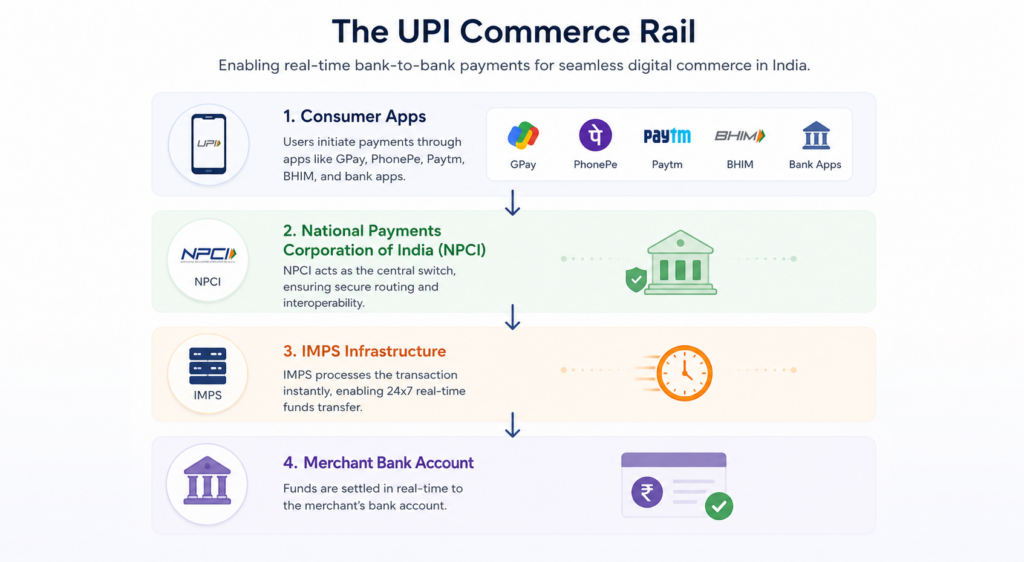
Unified Payments Interface, developed by the National Payments Corporation of India (NPCI), has redefined real-time retail payments. It connects hundreds of commercial banks into a single interoperable network accessible through smartphones.
Key Market Factors Driving UPI Adoption
- High Mobile Penetration: Nearly every consumer with a smartphone and an active bank account uses an NPCI-certified UPI application such as Google Pay, PhonePe, Paytm, or BHIM.
- Zero Friction for Buyers: Customers do not need to memorize multi-digit card numbers, expiry dates, or CVV codes. A simple 4-digit or 6-digit UPI PIN secures the entire checkout process.
- Real-Time Settlement: Transactions are settled via the Immediate Payment Service network, moving money instantly between accounts 24 hours a day, 365 days a year.
- Universal Interoperability: A buyer using one UPI application can pay any merchant using a completely different UPI application without compatibility barriers.
Personal UPI vs Business UPI: Understanding the Difference
When starting a new business venture, many founders and solo operators begin by accepting funds through a personal UPI ID or a mobile number. While simple, this approach causes significant operational bottlenecks as sales volumes rise.
+-------------------------------+-------------------------------+
| Personal UPI Setup            | Dedicated Business UPI Solution |
+-------------------------------+-------------------------------+
| Static QR code on counter     | Dynamic QR code per transaction |
| Manual screenshot validation  | Automated bank-layer verification|
| High exposure to fake slips   | Zero risk of manipulated receipts|
| Mixed personal and work funds | Structured corporate ledger   |
| Manual order tracking         | Automated order and invoice sync|
| Strict bank transaction limits| Higher commercial volume limits |
+-------------------------------+-------------------------------+
The Limitations of Personal UPI for Commercial Use
Personal UPI IDs are designed strictly for peer-to-peer transfers between friends and family. Using them for business sales introduces three critical risks:
- Banking Volume Restrictions: Personal savings accounts maintain daily transaction limits on inward and outward UPI transfers. High sales volumes can trigger automated bank account freezes.
- Accounting Confusion: Commingling personal grocery expenses with client project advance payments complicates bookkeeping, expense auditing, and Goods and Services Tax filing.
- Operational Delays: Fulfilling an order only after checking personal SMS alerts or requesting payment screenshots slows down fulfillment and creates poor customer experiences.
4 Ways to Accept UPI Payments for Your Business
Modern businesses operate across multiple sales channels, including brick-and-mortar stores, e-commerce storefronts, digital invoicing workflows, and conversational chat apps. Here are the primary ways to accept UPI payments:
                      UPI Collection Methods
                                │
        ┌───────────────────────┼───────────────────────┐
        ▼                       ▼                       ▼
1. Dynamic QR Codes     2. Payment Links        3. Website Checkout
Invoice-specific QR     Shareable URL links     Direct payment buttons
with locked amounts     for chat and email      inside your web store
1. Dynamic UPI QR Codes
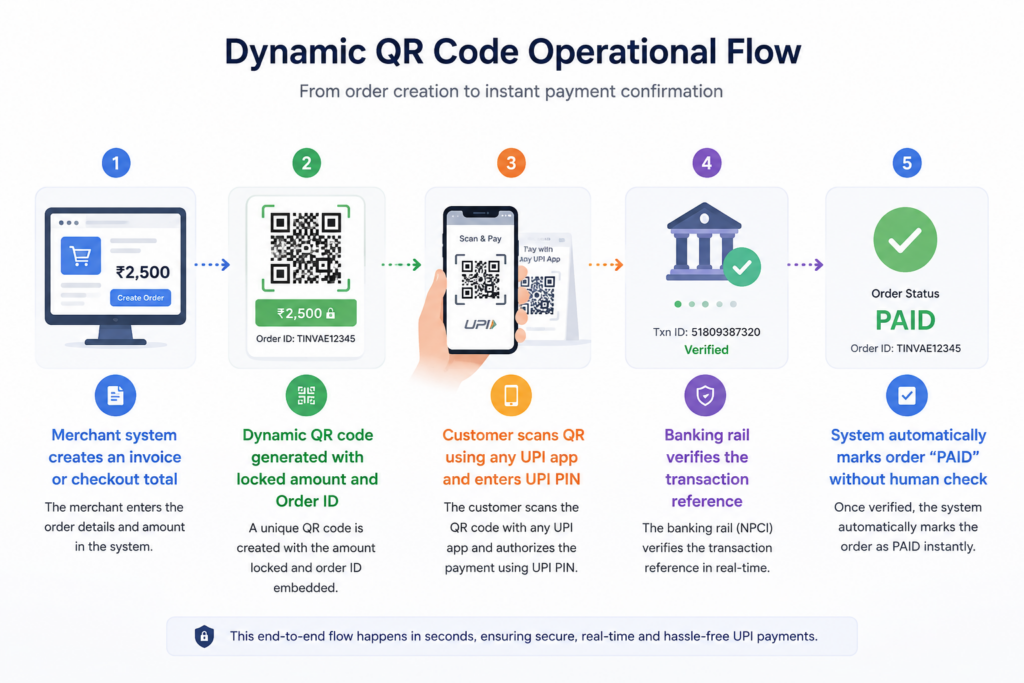
A dynamic QR code is generated programmatically for a specific order or invoice. It embeds the merchant Virtual Payment Address, the exact invoice amount, and a unique transaction reference number directly into the QR payload.
When the customer scans the code, their payment app automatically opens with the non-editable payable amount. This prevents accidental underpayment, overpayment, and reference mismatches.
2. Smart UPI Payment Links
Payment links are unique web URLs sent to customers via email, WhatsApp, SMS, or direct messaging channels.
When a customer clicks the link on a mobile device, it triggers UPI Intent, automatically launching their installed UPI app with the pre-filled amount. On a desktop browser, the link presents a crisp dynamic QR code for easy scanning.
3. Website and E-commerce Checkout Integration
E-commerce websites and online service platforms can integrate UPI directly into their checkout flow. Customers select UPI at checkout, scan an on-screen dynamic QR code or authorize a collect request, and receive instant on-page order confirmation.
4. UPI AutoPay for Recurring Retainers and Subscriptions
For businesses offering monthly services, SaaS subscriptions, or maintenance retainers, UPI AutoPay allows customers to authorize recurring debits. Once authorized with a UPI PIN, subsequent payments are deducted automatically on scheduled billing dates.
The Technical Advantage of Dynamic QR Codes
Static QR codes are common in small retail shops, but they fall short for digital commerce, professional services, and multi-order businesses. Understanding the technical mechanics of dynamic QR codes highlights why they are essential for modern merchants.
How Dynamic QR Codes Eliminate Payment Vulnerabilities
- Elimination of Screenshot Scams: Unethical buyers often use photo-editing applications or fake payment simulator tools to create convincing transaction confirmation screens. Because dynamic systems verify the transaction directly with the banking rail, fake screenshots never trigger order fulfillment.
- Prevention of Data Entry Errors: If a customer owes 14,850 rupees, a static code requires them to type the numbers manually. They might mistakenly enter 1,485 rupees or 14,580 rupees. Dynamic QR codes lock the value completely, ensuring accurate payments every time.
- Real-Time Order Tagging: Each generated QR code contains a unique transaction reference tied directly to an order ID in your database. When payment is received, your system updates the specific order instantly without administrative review.
Evaluating UPI Payment Solutions: Key Criteria
Selecting the right payment infrastructure provider requires evaluating several operational and technical factors that impact your bottom line.
+------------------+------------------------------+---------------------------+
| Platform         | Primary Strength             | Settlement Framework      |
+------------------+------------------------------+---------------------------+
| Tinave           | Dynamic QR & Low Fee Focus   | Direct Bank Settlement    |
| Razorpay         | Multi-Method & Cards Mix     | T+2 Days (Standard)       |
| Cashfree         | Automated Payouts & Links    | T+1 to T+2 Days           |
| Instamojo        | Digital Products & Storefront| T+2 to T+3 Days           |
| Paytm Business   | Physical Retail Counters     | Next Day / Manual Sweep   |
+------------------+------------------------------+---------------------------+
1. Transaction Fee Overhead
Traditional payment aggregators bundle UPI into standard merchant processing tiers, charging 1.8% to 2% plus 18% GST per transaction. For businesses handling substantial monthly volume, these percentage cuts erode profitability.
Dedicated merchant solutions like Tinave focus on minimizing transaction processing overhead, allowing businesses to retain a higher share of their revenue.
2. Settlement Speed and Working Capital
Cash flow consistency is crucial for inventory procurement, operational overhead, and payroll. Traditional gateways hold funds in intermediary escrow accounts for two to three business days. Direct bank-settlement systems ensure funds route directly into your business account.
3. Automated Reconciliation Tools
A payment solution must do more than just collect funds; it must streamline backend recordkeeping. Ensure the platform provides real-time transaction status updates, clear merchant dashboards, and exportable financial reports for accounting compliance.
Why Modern Businesses Choose Tinave for UPI Collections
Tinave is a merchant-focused UPI payment solution engineered to solve manual payment checking, dynamic billing issues, and high gateway fees for businesses, digital agencies, and independent service providers.
Customer Accesses Invoice / Checkout Link
                  │
                  ▼
Dynamic QR Code Generated with Exact Total
                  │
                  ▼
Customer Authorizes via Preferred UPI App
                  │
                  ▼
Direct Bank-to-Bank Fund Settlement
                  │
                  ▼
Instant Automated Verification & Order Update
Key Advantages of Tinave
- Dynamic UPI QR Generation: Creates invoice-specific QR codes with pre-populated, non-editable amounts and unique transaction references.
- Automated Real-Time Verification: Validates incoming payments directly against the banking network, removing the need to manually verify bank SMS alerts or transaction IDs.
- Direct Bank Account Settlements: Eliminates multi-day holding periods by routing funds directly into your verified business bank account.
- Reduced Processing Overhead: Provides a streamlined, cost-effective infrastructure compared to standard payment gateways.
- Fraud Prevention: Relies on direct banking verification rather than customer-submitted receipts, completely eliminating the risk of screenshot fraud.
- Simple Integration: Offers easy-to-deploy payment links and web embed options suitable for custom websites, e-commerce checkouts, and digital invoices.
Step-by-Step Implementation: Setting Up UPI for Your Business
Setting up an automated UPI collection workflow is straightforward and requires minimal configuration.
Step 1: Onboarding ──► Step 2: Bank Link ──► Step 3: Tool Setup ──► Step 4: Go Live
Step 1: Complete Merchant Registration
Register on your chosen payment platform using your official business details. Provide your basic business identity information, such as your GSTIN, PAN, and business address.
Step 2: Link Your Business Current Account
Connect your verified corporate or professional bank account. Complete the standard digital Know Your Customer (KYC) verification to enable high-volume inward transactions.
Step 3: Configure Your Preferred Payment Workflows
Depending on your business model, configure the collection tools you need:
- For Invoicing: Generate dynamic payment links and embed them directly into digital invoices, email proposals, and client messages.
- For E-commerce: Connect your checkout workflow to generate dynamic QR codes on your payment page.
- For Direct Sales: Create shareable smart links for use across WhatsApp and messaging channels.
Step 4: Test and Launch
Run a small live transaction to verify that the dynamic QR code loads correctly, the payment clears through your UPI app, and your dashboard records the transaction accurately. Once confirmed, start accepting client payments.
Industry Use Cases: How Businesses Use Dynamic UPI
Different business models leverage dynamic UPI collections to solve specific operational challenges:
1. E-commerce and Direct-to-Consumer Brands
Online stores often suffer from high cart abandonment when checkout forms require extensive card details. Integrating dynamic UPI allows buyers to pay in seconds using their favorite mobile app. Automated verification ensures orders are confirmed instantly without manual intervention.
2. Digital Agencies and Professional Services
Agencies, developers, and consultants frequently send PDF invoices for milestone payments and retainer fees. Embedding dynamic payment links ensures clients pay the exact contracted amount without typing errors, while the business receives funds directly into its bank account.
3. Educational Institutes and EdTech Platforms
Coaching centers, training academies, and online course creators use dynamic QR codes for course fee collections. Each transaction is tagged with the student registration ID, simplifying fee tracking and enrollment verification.
4. B2B Wholesalers and Distributors
Wholesale distributors handling high-value orders across regional networks use smart payment links to collect invoice balances upon delivery, avoiding cash handling risks and speeding up reconciliation.
Best Practices for Secure and Reliable UPI Operations
To ensure smooth payment operations and protect your business from payment disputes, follow these essential operational guidelines:
- Never Rely on Customer Screenshots: Always confirm transactions through your automated merchant dashboard or direct banking records before releasing goods or services.
- Use Dynamic Codes for Variable Amounts: Avoid using static QR codes for variable invoice amounts to prevent underpayments and human input mistakes.
- Maintain a Dedicated Current Account: Keep business payment collections strictly separated from personal finances to simplify tax audits and compliance.
- Display Clear Payment Instructions: Include brief guidance on invoices and checkout pages reminding customers that they can scan the QR code using any UPI-compliant mobile app.
- Monitor Transaction Statuses Regularly: Review your merchant dashboard periodically to track pending payments, completed settlements, and overall daily collection trends.
Conclusion
Accepting UPI payments has become the standard for conducting business in India. Moving away from manual personal UPI transfers and static QR codes toward an automated, dynamic payment workflow improves checkout conversion rates, protects your revenue from fraudulent screenshots, and saves hours of administrative reconciliation.
By choosing a specialized merchant solution like Tinave, businesses can harness the full power of dynamic UPI QR codes, enjoy direct bank settlements, and eliminate unnecessary gateway fees.
Evaluate your sales channels, configure your dynamic payment links, and deliver a fast, reliable, and secure payment experience for your customers today.