

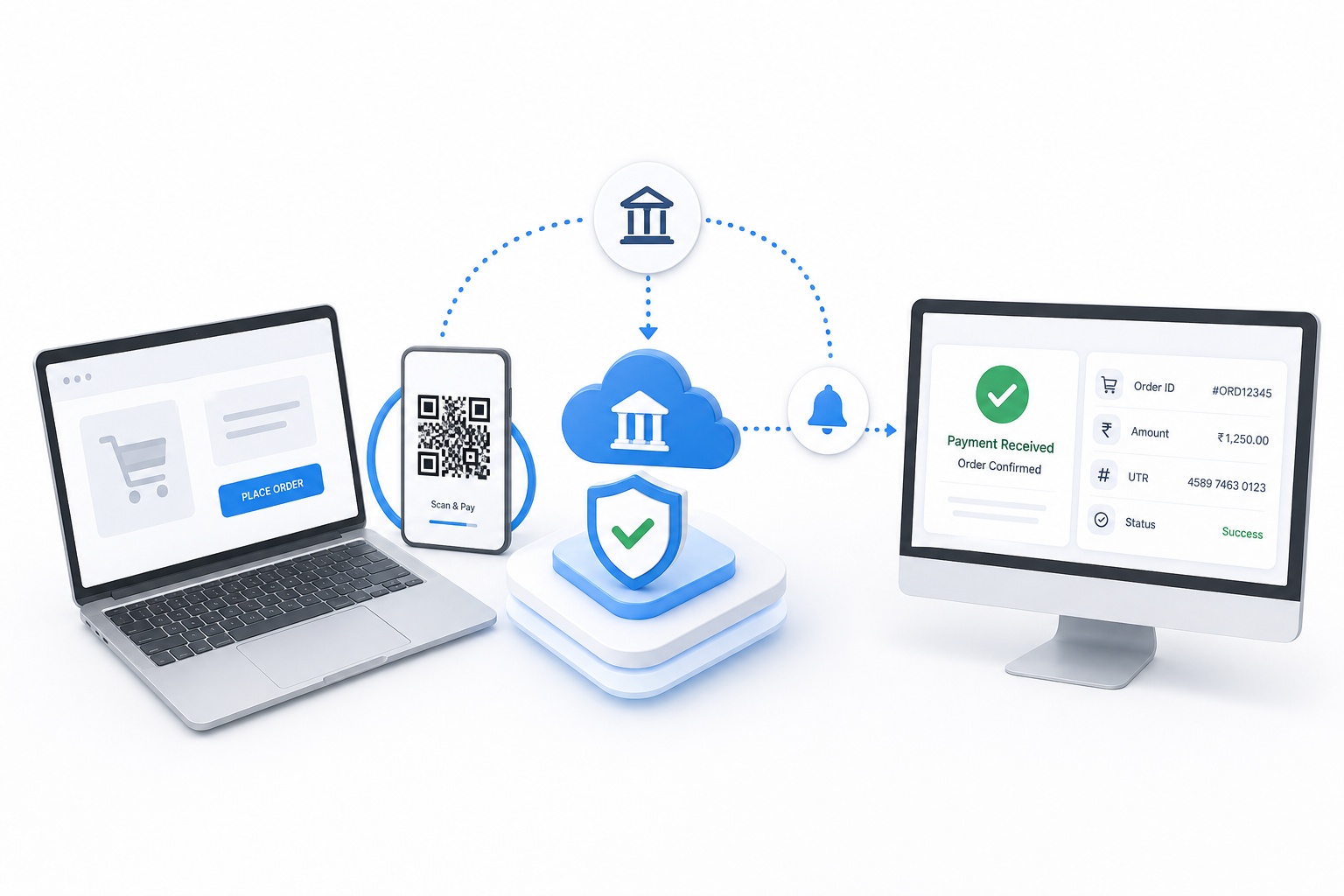
India's startup landscape has expanded at a rapid pace in 2026. With over two lakh recognized ventures and digital commerce thriving across tier 1, tier 2, and rural markets, online checkout is no longer a secondary option. It is the primary artery through which every business survives and grows.
Unified Payments Interface (UPI) now drives more than 80% of all digital retail transactions across the country. Whether an enterprise is scaling a Direct to Consumer (D2C) brand, building a Business to Business (B2B) SaaS application, running an e-commerce storefront, or distributing digital products, frictionless payment collection determines commercial longevity.
Choosing a payment gateway or payment collection infrastructure is one of the most critical foundational decisions a founder makes. The right payment infrastructure establishes buyer trust, prevents cart abandonment, stops payment fraud, and ensures working capital flows into your bank account without delay. Conversely, the wrong platform silently drains profitability through compounding gateway fees, high transaction failure rates, and manual order verification overhead.
This guide provides a comprehensive evaluation framework for Indian startups in 2026. We examine payment gateway mechanics, transaction economics, success rate optimization, dynamic UPI rails, compliance checklists, and modern alternatives to high percentage fee gateways.
What Is a Payment Gateway and Why Does Your Startup Need One?
A payment gateway is the digital infrastructure that captures, encrypts, and transmits payment data from a customer device to banking networks, allowing merchants to accept digital funds securely. It serves as the bridge between your website or application and acquiring banks.
+---------------+      +-------------------+      +------------------+
| Customer Cart | ---> |  Payment Gateway  | ---> |  Banking Network |
|  (Checkout)   |      | (Encrypt & Route) |      |   (NPCI / Card)  |
+---------------+      +-------------------+      +------------------+
                                                            |
+---------------+      +-------------------+                |
| Merchant Bank | <--- | Funds Settlement  | <--------------+
|   (Account)   |      | (T+1 / T+2 Cycle) |
+---------------+      +-------------------+
The Three Stages of a Digital Transaction
Every online checkout transaction moves through three distinct steps:
- Encryption and Capture: The customer selects a payment mode such as UPI, debit card, credit card, net banking, or a wallet. The gateway encrypts this transaction payload to safeguard sensitive customer data against interception.
- Authentication and Authorization: The gateway routes the encrypted request through relevant payment networks such as the National Payments Corporation of India (NPCI) for UPI or card networks like Visa, Mastercard, and RuPay. The issuing bank validates customer identity, checks account balances, and approves or declines the request.
- Settlement and Payout: Once authorized, the funds are collected from the customer bank account, processed through an intermediary aggregation escrow, and subsequently settled into the merchant bank account within an agreed timeline.
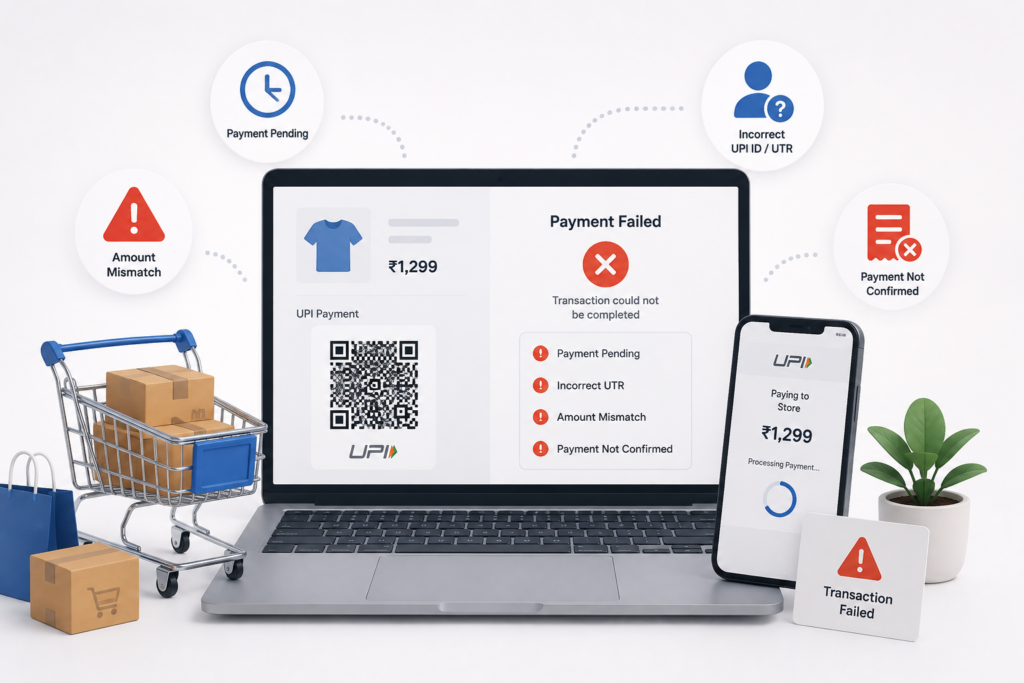
Strategic Reasons Startups Require Modern Payment Infrastructure
Founders often treat payment processing as a simple utility. However, high-performing startups treat checkout as a core conversion engine.
- Checkout Conversion and Trust: Indian consumers demand familiar, frictionless checkout experiences. Offering standard payment methods alongside one-click UPI apps builds instant credibility for young brands.
- Reduction of Abandoned Carts: Complicated checkout steps or clunky third-party page redirects cause high drop-off rates. Streamlined, native checkout flows retain buying intent.
- Automated Order Reconciliation: Fast-growing businesses cannot afford manual cross-referencing between bank statements and order management software. Automated webhook systems verify payments instantly, preventing duplicate transactions, order confusion, and fraudulent screenshot scams.
- Security and Regulatory Compliance: Handling customer payment credentials requires compliance with Payment Card Industry Data Security Standards (PCI DSS), Reserve Bank of India (RBI) tokenization guidelines, and data localization mandates. Standard gateways and verified UPI aggregators absorb this compliance burden on behalf of lean teams.
The 5 Pillars of Evaluating Payment Gateways in India
Selecting the ideal payment platform requires evaluating metrics beyond headline marketing promises. Five foundational pillars separate scalable payment solutions from inefficient systems.
           +---------------------------------------+
           |       PAYMENT SELECTION PILLARS       |
           +---------------------------------------+
                               |
       +-----------+-----------+-----------+-----------+
       |           |           |           |           |
+-------------+ +-------------+ +-------------+ +-------------+ +-------------+
| Success     | | Speed &     | | Settlement  | | True Total  | | Dispute &   |
| Rates (SR)  | | Onboarding  | | Reliability | | Cost (MDR)  | | Security    |
+-------------+ +-------------+ +-------------+ +-------------+ +-------------+
1. Transaction Success Rates and Smart Routing
Transaction Success Rate (SR) measures the proportion of initiated payment attempts that settle successfully. In competitive e-commerce and SaaS environments, a 2% drop in your overall success rate leads directly to lost revenue and customer churn.
Traditional payment aggregators frequently experience downtime across specific partner bank nodes. When a single acquiring bank experiences high latency, transactions routed through that bank fail.
Leading modern gateways deploy Smart Dynamic Routing. This technology monitors bank API health in real time. If a particular bank gateway slows down, the system automatically redirects the transaction to an alternate banking node or prompts the customer to authenticate via an optimized UPI route.
2. Speed of Developer Integration and Onboarding
Startups move fast and cannot wait weeks for manual compliance approvals. Evaluate platforms across two technical factors:
- Frictionless Digital KYC: Fully digital onboarding with automated document validation allows startups to go live within hours rather than days.
- Robust SDKs and Clean APIs: Well-documented REST APIs, native webhooks, and plug-and-play plugins for WooCommerce, Shopify, custom Django, Node.js, and PHP environments significantly reduce engineering overhead.
- No-Code Options: For businesses testing minimum viable products (MVPs), features like shareable payment links and embedded checkout buttons eliminate the immediate need for backend coding.
3. Settlement Cycles and Working Capital Health
Cash flow is the lifeblood of early-stage businesses. Standard settlement cycles in India follow a T+2 or T+1 schedule, where T represents the transaction day. Under a T+2 model, funds earned on Friday might not reach your bank account until Tuesday.
| Settlement Model | Payout Timeline | Impact on Startup Cash Flow |
| T+2 Standard | 2 business days after sale | Moderate cash flow delay; weekend bottlenecks |
| T+1 Accelerated | Next business day | Good operational liquidity for steady inventory |
| Instant Settlement / Direct UPI | Real-time to few minutes | Maximum liquidity; zero capital locked in intermediary escrows |
For bootstrapped merchants with high operational costs or rapid inventory turnover, waiting multiple days for settlement creates severe working capital constraints. Solutions that route payments directly to merchant current accounts via verified dynamic UPI rails eliminate settlement lag completely.
4. True Cost of Processing: MDR and Hidden Fees
Payment processors charge a Merchant Discount Rate (MDR), which is a percentage fee deducted from every transaction. While a 2% processing fee may seem small initially, it becomes a substantial operating expense as sales volume expands.
Monthly Revenue: Rs. 10,00,000
Average Gateway Fee: 2% + 18% GST = 2.36% Total Cut
Annual Payment Processing Loss: Rs. 2,83,200 pure profit drained
Founders must also identify non-obvious fees, including:
- Setup Fees and Annual Maintenance Charges (AMC): Upfront or recurring charges applied by legacy gateway vendors.
- Refund and Failed Transaction Penalties: Hidden operational fees assessed when processing refunds or handling payment dispute charges.
- International Card surcharges: Significant foreign exchange markups and compliance fees on cross-border transactions.
5. Security, Fraud Defense, and Verification Accuracy
Payment fraud poses severe operational risks to growing merchants. Common threats include fraudulent chargebacks, spoofed transaction confirmation screenshots, and bot-driven checkout spam.
Modern payment solutions implement automated fraud checks, including dynamic transaction reference tracking, IP-level bot filtration, and direct bank UTR (Unique Transaction Reference) validation to confirm that incoming funds match active orders before fulfilling shipments.
The Rise of UPI: Why Startups Are Rethinking Traditional Gateways
UPI has transformed consumer behavior across India. It is no longer just a payment option; it is the default consumer preference.
       INDIAN DIGITAL COMMERCE PAYMENT SHARE (2026)
+-------------------------------------------------------------+
| [████████████████████████████████████████████░░░░░░░░]      |
|  UPI (84%)                                    Cards & Others|
+-------------------------------------------------------------+
With UPI driving the vast majority of online transactions, early-stage businesses are re-evaluating whether paying high percentage fees to traditional payment aggregators makes sense for purely domestic UPI transactions.
Understanding Static QR Codes vs Dynamic UPI QR Codes
Many local businesses begin by accepting payments through static QR code stickers. However, static QR codes create massive operational bottlenecks for e-commerce and digital platforms.
Static QR Flow:
Customer scans generic QR -> Enters amount manually -> Enters payment note ->
Sends payment -> Takes screenshot -> Merchant manually checks bank SMS -> Order verified.
(High Friction, Prone to Screenshot Fraud)

Dynamic QR Flow:
System generates unique QR per order -> Exact amount pre-filled -> Unique reference encoded ->
Customer scans and approves -> Gateway detects UTR instantly -> Auto-approved.
(Zero Friction, Zero Manual Verification)
| Feature | Static UPI QR Code | Dynamic UPI QR Code System | Traditional Card Gateway |
| Amount Handling | Customer types manually | Automatically locked to exact order value | Automatically locked to exact order value |
| Order Matching | Manual cross-checking of bank SMS | Automated instant UTR linking | Automated transaction status callbacks |
| Fraud Vulnerability | High risk of fake payment screenshots | Zero risk; verified at banking level | Minimal risk; card fraud checks apply |
| Transaction Cost | Free (Zero MDR) | Low flat fee or minimal subscription pricing | 2% plus 18% GST per transaction |
| Settlement Speed | Direct to bank account | Direct to bank account | T+1 or T+2 batch settlement |
How Tinave Modernizes Payment Collection for Startups
While traditional aggregators bundle legacy cards, wallets, and net banking behind high percentage fees, Tinave delivers a merchant-focused UPI payment infrastructure designed specifically for Indian startups, e-commerce stores, and digital businesses.
Tinave eliminates the two greatest pain points in modern Indian commerce: high transaction commission cuts and manual payment verification friction.
1. Dynamic UPI QR Codes with Automated Order Matching
When a customer checks out on your website, Tinave generates an order-specific, dynamic UPI QR code with the exact transaction total embedded. The customer scans the QR code using any preferred UPI app, such as Google Pay, PhonePe, Paytm, CRED, or BHIM, and authorizes the payment.
Tinave captures the unique transaction reference (UTR) in real time. It automatically validates that the received amount matches the open cart and updates your store status instantly without requiring manual administrative intervention.
2. Eliminating Fraudulent Screenshots and Bot Attacks
A major operational issue for growing brands is "screenshot fraud," where dishonest buyers send fabricated transaction success images to claim order fulfillment.
Because Tinave validates the real-time settlement directly against banking network rails, orders are marked as paid only when the funds land successfully. This removes human error and protects your business from fake slips.
3. Slashing Gateway Commission Fees
Traditional payment gateways extract 2% to 3% on every checkout. As your business scales to ten lakhs or one crore in monthly sales, these percentage fees significantly eat into your operating margins.
Tinave changes this financial model by helping merchants collect UPI payments directly to their own business bank accounts without high percentage-based deductions. You retain your hard-earned revenue while maintaining an enterprise-grade automated checkout workflow.
4. Direct Bank Settlements with Zero Capital Hold
Instead of locking your business revenue inside an aggregator escrow account on multi-day settlement schedules, Tinave enables direct merchant account settlements. Funds flow directly into your designated business current account, giving you instant access to your working capital.
Comparing Gateway Models: Traditional Aggregators vs Direct UPI Solutions
To choose the best payment setup for your business model, consider how traditional gateways compare with direct UPI-focused platforms.
| Feature / Criteria | Traditional Aggregators (Razorpay, Cashfree, PayU) | Direct UPI Infrastructure (Tinave) |
| Primary Payment Modes | Cards, UPI, Net Banking, Wallets, BNPL | Optimized Dynamic UPI Rails and Payment Links |
| Fee Structure | 2% standard MDR + 18% GST on all transactions | Flat, merchant-friendly pricing structure |
| Settlement Timeline | T+1 to T+2 business days | Real-time direct-to-bank settlement |
| Order Verification | Automated via Aggregator Dashboard | Automated instant UTR verification |
| Ideal Business Profile | Companies requiring international cards and BNPL | Indian startups, D2C, B2B services, and digital creators |
| Screenshot Fraud Protection | Automated system verification | Automated API and UTR matching |
| Working Capital Impact | Revenue held in aggregator escrow cycles | Immediate access to funds in business bank account |
Payment Gateway Documentation and KYC Checklist for Indian Startups
To avoid onboarding delays, prepare your statutory compliance documentation before initiating gateway or merchant account registration.
       MANDATORY WEBSITE COMPLIANCE CHECKLIST
+---------------------------------------------------+
| [x] Terms and Conditions                          |
| [x] Privacy Policy (Data Protection)              |
| [x] Shipping and Delivery Policy                  |
| [x] Refund and Cancellation Policy                |
| [x] Contact Us (Business Email, Phone, Address)   |
| [x] About Us (Clear Business Identity)            |
+---------------------------------------------------+
1. Mandatory Business KYC Documentation
- PAN Card: Permanent Account Number of the business entity (Private Limited, LLP, Partnership) or individual proprietor.
- GST Registration Certificate: Required for registered commercial entities.
- Business Bank Account Proof: A cancelled cheque or recent bank account statement from a legitimate business current account in the name of the entity.
- Proof of Registered Address: Electricity bill, telephone bill, lease deed, or rent agreement matching the official entity address.
- Entity Specific Documents:
- Sole Proprietorship: Proprietor Identity proof (Aadhaar or Passport) and Udyam Registration.
- Limited Liability Partnership (LLP): Certificate of Incorporation, LLP Agreement, and Partner KYC.
- Private Limited Company: Certificate of Incorporation, Memorandum of Association (MOA), Articles of Association (AOA), and Board Resolution authorizing the account manager.
2. Website Compliance Requirements
Payment networks enforce strict merchant website standards. Your digital storefront must display the following fully accessible policy pages before applying:
- Terms and Conditions: Outlines the legal terms governing purchases and platform usage.
- Privacy Policy: Discloses customer data collection, storage, and handling standards.
- Refund, Return, and Cancellation Policy: Defines timelines, fee deductions, and conditions for issuing customer refunds.
- Shipping and Delivery Policy: Outlines delivery timeframes, tracking mechanisms, and shipping partners for physical products.
- Contact Us Page: Must list an active corporate email address, customer support phone number, and physical business office address.
Developer Integration: Architecture and Setup Best Practices
Integrating payment infrastructure requires a balance of user experience, speed, and backend reliability. Follow these industry architectural patterns when setting up your store.
+---------------+        +----------------------+        +-------------------+
| User Checkout | -----> | Generate Dynamic QR  | -----> | Customer Scans    |
| (Storefront)  |        | (Backend API Call)   |        | & Pays via UPI    |
+---------------+        +----------------------+        +-------------------+
                                                                   |
+---------------+        +----------------------+                  |
| Order Status  | <----- | Webhook Verification | <----------------+
| Marked "PAID" |        | (Validate UTR & Amt) |
+---------------+        +----------------------+
Implementing Idempotent Webhooks
Network connectivity drops can occasionally interrupt communication between banking servers and your website. Ensure your backend handles webhook callbacks idempotently.
- Use a unique transaction reference identifier for every checkout attempt.
- If a webhook callback triggers multiple times for the same transaction ID, ensure your application updates order status once without generating duplicate records or dispatching duplicate orders.
Fallback Verification and Polling
While webhooks deliver immediate notifications, reliable payment integrations also implement a client-side polling mechanism or automated background query. If a customer pays but closes their mobile browser before the webhook completes, a fallback status check queries the payment status using the transaction reference and confirms the order without friction.
International Payments and Export Compliance
If your startup sells software subscriptions, digital assets, or physical goods to international customers, you must comply with distinct regulatory standards.
1. Regulatory Requirements for Cross-Border Transactions
- Importer Exporter Code (IEC): Issued by the Directorate General of Foreign Trade (DGFT), the IEC is mandatory for physical exports and highly advisable for service exports.
- Foreign Inward Remittance Certificate (FIRC / e-FIRC): This official banking document certifies that foreign currency payments entered India legitimately. It is necessary for reconciling foreign inward remittances and claiming zero-rated GST export benefits.
- RBI Data Localization Guidelines: Ensure all payment processing systems comply with Reserve Bank of India mandates regarding the secure storage of Indian user payment credentials within local data servers.
Actionable Next Steps: Optimizing Your Startup's Checkout
Upgrading your payment architecture directly enhances operational margins and customer satisfaction. Take these concrete steps to improve your setup:
- Audit Your Current Transaction Costs: Calculate your total payment processing expenses over the last quarter, including percentage MDR, gateway platform fees, and GST deductions.
- Assess Your Payment Mode Distribution: Review your analytics. If UPI accounts for over 70% of your transaction volume, continuing to pay a 2% cut on every transaction is eroding your profit margin.
- Automate Your Verification Workflow: Eliminate manual bank statement checks and screenshot validation. Implement dynamic UPI QR codes and automated webhooks to protect your staff's time.
- Deploy High-Reliability Checkout: Choose a payment partner that combines fast settlement times, low fees, high uptime, and responsive developer support to scale smoothly alongside your business.